
Common Threads Publishing Presents:
The Land Of Milk And Honey
An Immigrant Tale Of Rags To Riches In America
The Land Of Milk And Honey is the long-overdue biography of one of America’s most successful immigrants. Joe Benvenuti was and remains a symbol of all you can achieve with grit, determination and a belief that anything is possible in America.
About the Author
Deron R. Benvenuti
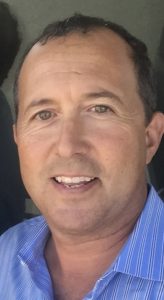
Deron R. Benvenuti is a first-time author who has spent most of his career in commercial real estate. He began outlining this book in 2010 and began writing it shortly after his grandfather’s passing in 2012. Deron is the father of three wonderful daughters and an equally wonderful son-in-law and grandson. He lives in Sacramento with his wife, Aimee, and their daughter, Olivia. Riley and husband Miguel live in Sacramento with their son, Liam. Abigail lives in New York City.
From Chapter 14: The Sergeant and the De Soto
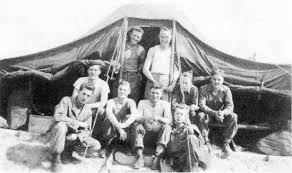
The 1,000-bed 220th General Hospital was activated at Fort Lewis, Tacoma, Washington on September 28, 1944. Named after Meriwether Lewis of the Lewis and Clark expedition, Fort Lewis was one of the largest and most modern military reservations in the United States. In July of 1944, it was redesignated as an Army Service Forces Training Center and within just a few months, Fort Lewis had become the largest Service Forces Training Center in the nation, training medics and engineers exclusively. Lying on the banks of American Lake, it remains the premier military installation in the northwest United States.
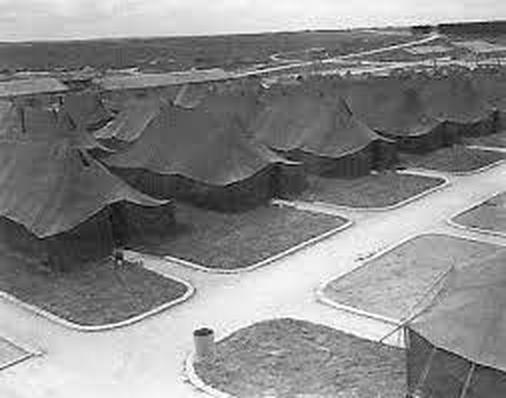
Initial training began on October 9, 1944. A unit field exercise on October 16, 1944, Benvenuti’s 24th birthday, led the entire organization to a bivouac area. Four motor convoys were necessary to transport the Hospital training and housekeeping equipment. For a duration of 9 days, the unit simulated the actual function of a general hospital in the field under canvas, after which the bulk of the Enlisted Men began parallel training at Madigan General Hospital, Fort Lewis, Washington. So named for distinguished neuro-psychiatrist Patrick M. Madigan, it was a $3,000,000 expansion of the Fort Lewis Hospital begun in 1943.
In January of 1945, the organization was running a full-time eight-hour per day training schedule with all Officers and Enlisted Men taking part, when the orders came down for movement by rail. The 220th was to travel in two troop trains of approximately 10 cars each, with a separate Train Commander and complete Staff for each train. The Post Band was present and played some tunes for the men prior to departure. Major General Joseph D. Patch, Commanding General, ASFTC, Fort Lewis, Washington, with Colonel Frank Royse, Chief of Staff, were both present at entrainment.
“So in January,” recalled Benvenuti with a gleam in his eye, “just before we was to get shipped there, Nancy was born. I went and asked the colonel because they gave everybody a 3-day pass when they had a baby. He said ‘you can’t do it. I shouldn’t even be telling you this but you’ve been training for Japan, but you’re going to Germany. All the training you had for Japan, forget it. And you’re going to get shipped right away. In two or three days we start going back to Boston’.”
Most units in Benvenuti’s training class assumed they’d muster to where the bloodiest and most intense fighting was, which at the time was Japan. But with the Invasion of Sicily and the D Day invasion of Normandy on June 6th, 1944, where allies liberated France, Hitler’s focus had once again turned toward his western neighbors if he was to control any of Europe. Thus, our leaders sent many units previously in training for the fight against Japan to Europe in order to capitalize on the momentum, drive Hitler back across the continent and put an end to the war as quickly as possible.
On Saturday, January 20th, 1945, the 220th General Hospital arrived at Camp Myles Standish, Massachusetts, the last piece of solid ground they would see before landing on the continent of Europe, and Benvenuti was determined to meet his newborn daughter. Arrival took place during zero-degree weather. The men and equipment moved quickly and efficiently into the Staging Area quarters for processing. “So we got to Boston by train and he promised me when we got to Boston he’d get me a two or three-day pass, it’s only two hours from Carlstadt to Boston, Benvenuti proclaimed. “You get the New England electric train and you get into New Jersey within like an hour and a half. We got there and I went into his office and he says ‘Joe, I don’t know when we’re shipping, we could be shipping tonight, tomorrow night, I have no idea.’ So I knew we couldn’t be shipped over without being processed, shots and all that, you know. And I figured it would be at least three days. So in all the camps I used to belong to they would have passes and they would trust me to run them from the corporal’s office to the colonel’s to give out. So I went into the corporal’s office there I didn’t know him from Adam and he didn’t know me and I told him my colonel needs a book of passes. I made one that same day and I signed the colonel’s name. I figured what are they going to do to me that’s worse than all the German submarines bombin all the ships?”
That was a theme that Benvenuti would carry with him throughout his life and business pursuits, perhaps the greatest example of his signature philosophy: “don’t ask permission, ask forgiveness”. He had good reason to be concerned that he might not even make it across the Atlantic. All told, 3,000 Allied personnel succumbed to U-boats in World War II. “I got to Carlstadt at like 8 o’clock,” he continued, “and they were surprised to see me because I didn’t even call ‘em. I stayed one night, then two night, then three night, then I just had that feeling that we were gonna go, so I told Nancy and all my family and friends there that I wouldn’t come no more. And sure enough that night we got shipped out.”
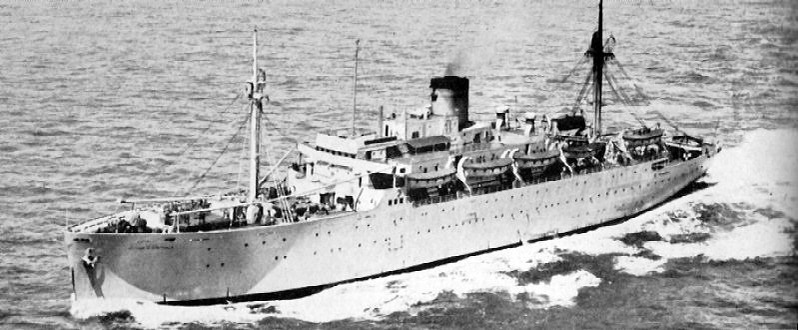
On January 25th, the organization moved to the Boston Port of Embarkation for the European Theater of Operations. U.S. Army Transport (USAT) “George W. Goethals” cleared the dock at five-thirty on the evening of January 26th. Sailors passed the days doing calisthenics, French and German language classes and drills that included abandon-ship exercises. The journey across the Atlantic was mostly uneventful, except for one minor mishap that caused a brief panic among Benvenuti and his shipmates.
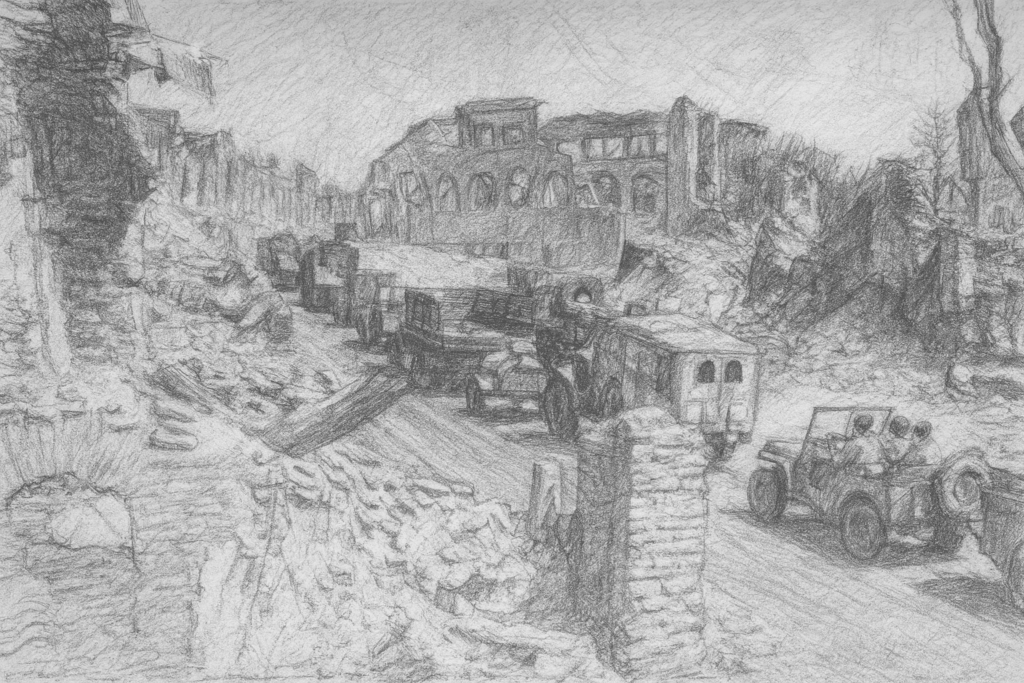
“We went in convoy with maybe 50, 60, sometimes a hundred ships,” he marveled. “They all followed each other and there were some destroyers and U.S. warplanes that would circle in case the submarines with torpedoes would try to get in, they had radar you know. So we got to England, that’s where the ships all met because all the ports were destroyed along the French border and there were sunken ships by the Germans.” These were the ports that had been bombarded during the German Blitzkrieg of France in 1940 and later by allied bombers, rendering most of them inaccessible, with half-sunken ships everywhere. The great moral victory for the Allies at Dunkirk had left a trail of sunken warships and downed planes in its wake that created difficult passage for the ships bringing in fresh troops from overseas.
“Over there In January it was cold and foggy as we were crossing the English Channel, you know, the white cliffs of Dover, and there were a lot of ships, and all of a sudden we got rammed,” recalled Benvenuti, his eyes betraying the trepidation he and his bunkmates had felt. “We all automatically jumped off our bunk. They were like mosquitoes, they were too close together and they couldn’t see each other it was foggy. And the captain says wait, wait, wait, go back to your bunks, everything is ok, these ships were built with partitions and we only got maybe two full of water and the rest is ok and there’s no sinkin, don’t worry about it there’s no problem. So, we were lucky.”
"I told him my colonel needs a book of passes. I made one that same day and I signed the colonel’s name. I figured what are they going to do to me that’s worse than all the German submarines bombin all the ships?”
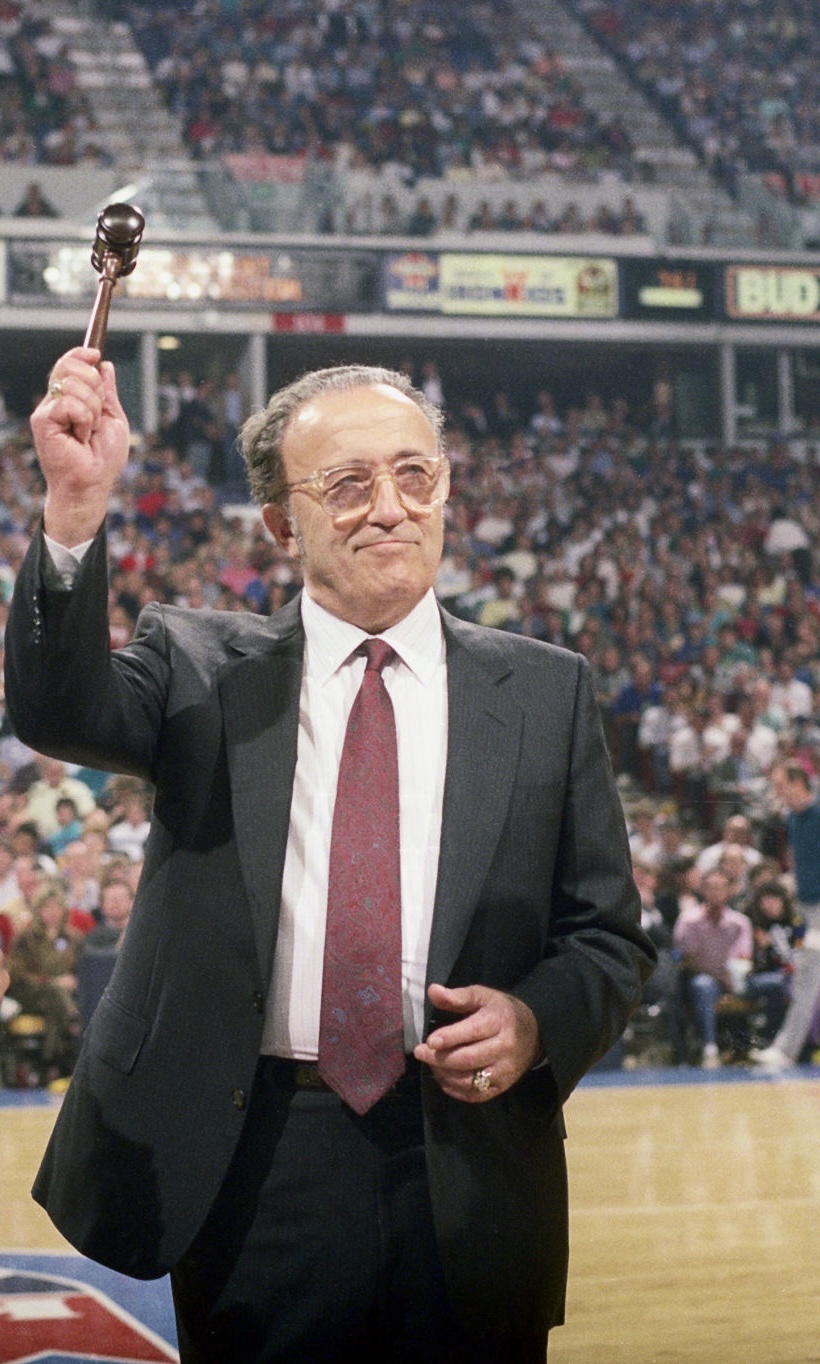
Joseph "Joe" Benvenuti Tweet