
Chapter Four: The Flight to Salvation
Pastor Who Would Not Bear Arms Wants Citizenship
Special to the New York Times
LITTLE FALLS, N.J., Sept. 2.—
The Rev. Angelo Benvenuti, pastor of the Christian Pentecostal Church of this township, has appealed to President Roosevelt to give him citizenship papers denied in naturalization court because the minister said he would not bear arms in case of war.
In a letter to the White House, the pastor reiterated his views as expressed in naturalization court in Paterson several weeks ago, saying he would risk his life in the trenches to administer aid and spiritual help to the wounded and dying. But he would not take another life.
“This (the United States) is the place I love best next to heaven,” he wrote to the President.
From the New York Times, Saturday, September 3, 1938
As was the common practice among immigrants arriving in a new country, having found that their name was difficult for others to spell or pronounce and to better fit in and relate it more closely to the language and pronunciations of their new country, young Giuseppe became Joseph in his newly adopted environs. Angelo’s following was increasing. Although New Jersey, like the rest of America in the 1920s, was flush with money, giddy with military success, enthralled by jazz, automobiles and the movies, where the last thing people wanted to do was restrain themselves–everything was closed on Sundays but church. And in the middle of Prohibition, there was great demand for preachers to help drinkers and gamblers resist temptation. Joseph continued shining shoes and picked up more newspaper routes in order to help put food on the table, as economic conditions for the Benvenutis would worsen substantially before getting better in their new home.
Thirteen days after young Joseph’s 9th birthday, Wall Street investors traded a staggering 16 million shares on the New York Stock Exchange in a single day. Billions of dollars vanished in thin air, wiping out thousands of investors. In the aftermath of that event, dubbed “Black Tuesday,” America and the rest of the industrialized world spiraled downward into the Great Depression, the deepest and longest-lasting economic downturn in the history of the Western industrialized world up to that time. The Roaring 20’s and the Jazz Age that had ushered in the likes of Louis Armstrong and Duke Ellington, The Phantom of the Opera, flagpole sitting, The Great Gatsby, the Charleston and the assault on Darwinism had suddenly swung to a halt. The nation and the townships of New Jersey plunged into a tailspin that for many was unrecoverable. By 1933, nearly half of America’s banks had failed, and unemployment was approaching 15 million people, or 30 percent of the U.S. workforce. In Little Falls, the unemployment rate topped 25% and many companies shut down, including one of its earliest woolen mills that employed over 100 people. The Dow Jones Industrial Average would not return to its pre-1929 heights until November of 1954, about 25 years later.1 One-tenth of the population were dependent upon FDR’s New Deal. New Jersey issued begging licenses to the poor and unemployed people because the New Jersey government funds were growing low and were being exhausted. The Works Progress Administration, part of FDR’s Second New Deal, created many new jobs in order to support the poor and unemployed. These projects included the expansion of Fort Dix (which would later play a significant role in Benvenuti’s life), Roosevelt Park in Edison, and Rutgers Stadium in Piscataway. In Jersey City, political boss Frank Hague secured the construction of the Medical Center, the Armory, and Roosevelt Stadium.
At its depth, the jobless in New Jersey ranged between a quarter to a third of its workforce, with per capita income falling from $839 in 1929 to $433 in 1933. Some 140 banks closed.2 The Depression was equally hard on preachers, who relied on their congregations for financial support. Joseph often found himself spinning his wheels as his shoeshine business was all but dried up and new routes were hard to come by for newspapers. As the United States industrialized, factory owners hired young workers for a variety of tasks, Benvenuti and his older sisters being no exception. In many cases, there were no protections against verbal and physical abuse. Child labor laws would not take a foothold until at least 1938 with passage by FDR of the Fair Labor Standards Act, and children were easier to control with threats and abuse that scared them into doing what a supervisor required.3
Industries like Paterson’s famed Patent Arms Manufacturing Company, begun by Samuel Colt, which occupied a magnificent four-story brownstone building built on an area directly below the waterfalls, would give way to the silk and textile industries that would define New Jersey in the 1930s. It was there that Colt first manufactured his newly patented repeating firearm, the revolver, with mother of pearl handles, which were essential in securing the American frontier.
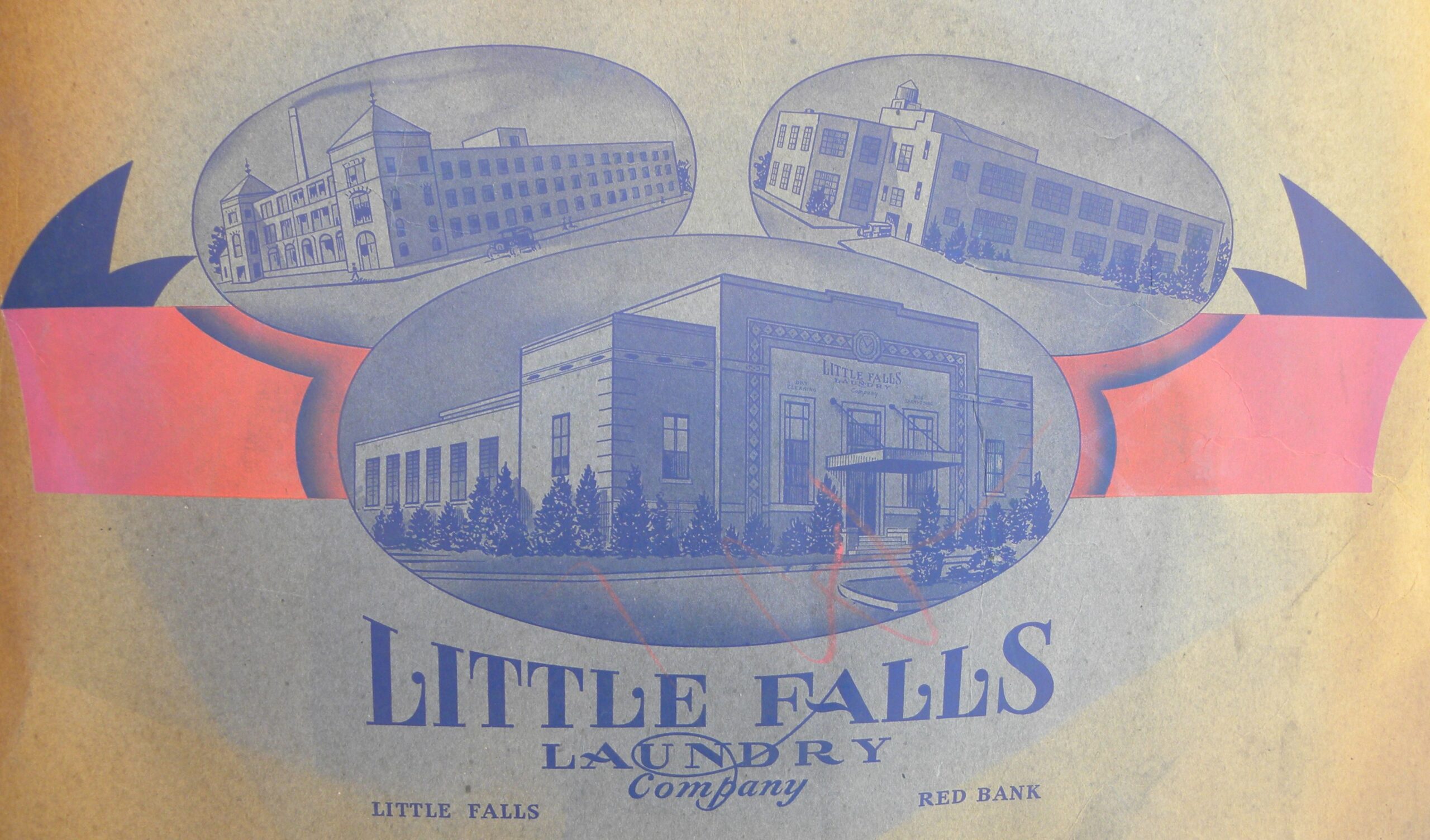
The sisters worked under the hardfisted “slave drivers” at the Little Falls Laundry Plant, which was one of the largest in the United States at the time. “All the foremen were mean”, recalled Joseph, a tinge of sadness in his voice. “And they had no unions in them days, but they were getting em in 1936.” The plant was founded in the early 1900s by an immigrant from the Netherlands named George Vander May along with his son Nicholas. Nicholas and his brothers, ironically, were also in the business of “huckstering” fruits and vegetables in the same neighborhoods where young Joseph would begin and cultivate J. Benvenuti Wholesale Groceries. Hucksters, a term often given the negative albeit incorrect association with “hustlers”, were a product of the depression and for many years brought foods and goods to consumers confined mostly to their area of the city. They were as constant as the North Star in their movements to provide a service to the average American family trapped in the inner city during that era.4
Before launching a delivery enterprise of his own, Joseph at age 12 would add plastics factory worker to his growing portfolio of jobs, so determined was he to help put food on the family table. At the time of his entry into the workforce, the economy continued to deteriorate, and unemployment increased further to 24.1%. There were few jobs, and many ordinary Americans resorted to living in the streets or in old cars, setting up shantytowns that became popularly known as “Hoovervilles” after the president Americans widely blamed for allowing the economic conditions to persist. Towards the end of 1932 the American voter used the power of Democracy to show Herbert Hoover what they thought of his term of presidency during these bad times and voted strongly in favor of Franklin D. Roosevelt by 472 electoral votes to 59. Around the world, changes also occurred when the British jailed the Indian nationalist leader Mahatma Gandhi. Also in Britain, the first ever splitting of the Atom occurred, and in Russia major problems with the agricultural policy caused mass starvation and death.5
As Roosevelt’s New Deal had not fully taken the shape of the job creation that would come out of the Civilian Conservation Corps and Works Progress Administration, it was the harsh working conditions under which Joseph and his sisters were indentured that would forge a steely resolve in the young man. He was determined to find a way to never have to work for another man again, so help him God. “In Canada, I was shining shoes at age 6 and also selling newspapers,” recalled Joseph. “And then when we went to New Jersey I did the same thing, distributing papers to the homes on my bicycle. When I was about 12, I went to work in the plastics factory where they made glasses, combs and toys; they put the Monsanto chemicals in a big dye and the dye would close and form whatever you were making,” he continued with the look of someone who had just accidentally inhaled hair spray. “I used to have what they called the deadman’s shift, 12 to 8. I was 13 or 14 when I graduated the 8th grade, and I didn’t go to high school. I was supportin the family and we were 15 kids. Mary worked and Rosie worked and I worked. The rest were all kids.” Raising his arms and eyes toward the sky, he continued: “But anyway, I prayed that I would get out of the work business and get into some kind of business, any kind of business where I wouldn’t have to work for anybody.” In one of many decisions throughout his lifetime that would come to symbolize his self-reliance, he swiftly showed a girlfriend the door when she proclaimed her father, a factory owner, would set him up with a good job so he could have the same status as the other young men. It would be over his own dead body he would ever work for another man, not the least the owner of a reviled factory.
Like the Vander May brothers before him, Joseph began his business while working his other jobs; and his enterprising spirit would guide him to success not only in the grocery business, but later to the building blocks of his greatest achievements. And while doing all of this, the young immigrant with so many decks stacked against him somehow managed to finish middle school. On June 25th, 1935 at the age of 14, Benvenuti was one of 16 kids to receive diplomas from the Great Notch School No. 2 in an evening ceremony held, ironically, in the auditorium of the Little Falls Laundry. Twelve days earlier, a washed up “tomato can” boxer named James J. Braddock, fresh from the relief rolls, had climbed through the ropes at the Madison Square Garden Bowl to fight Max Baer. At odds of ten to one and higher, Braddock was the biggest underdog in heavyweight championship history. But when the ring announcer, Al Frazin, introduced him—“The challenger, from Jersey City, New Jersey, weighing in at one hundred ninety-one and three-quarters pounds, James J. Braddock!”—Braddock was engulfed in applause. Millions of Americans cheered for him that night, not because he was the betting underdog, not because the champion was unpopular, and not because Braddock was particularly exciting to watch, but because he personified their own struggles. Like so many of them, he had been humbled by forces beyond his control. Like so many of them, he had been devastated by a system that he assumed was stable. Like so many of them, he had been forced to ask for help. The decline in Braddock’s personal fortunes mirrored the national collapse, perhaps more than that of any other American. Just before the crash, he had been one of the best young fighters in the world—everything was within his grasp. And then, when it hit, he tumbled from contender to tomato can to longshoreman to welfare recipient. “His time was the Great Depression and he was a man of his time,” Red Smith wrote.”6
The “Bulldog of Bergen”, Braddock was born in Hell’s Kitchen in Brooklyn and raised in North Bergen, New Jersey near the Hoboken and Weehawken docks. It was at these docks that he fought for his life loading railroad ties to keep in shape and literally keep lights on and heat in his family’s basement apartment before his miraculous last shot at the title and his remarkable triumph over the ruthless Baer and return to glory. It was during these same years and on these same docks that young Joseph Benvenuti was learning too about defeat and sacrifice as he set about building the foundations of his entrepreneurial future. He was well aware that the men laboring under these conditions weren’t just washed-up fighters, but also bankers, lawyers and stockbrokers, and if they were scraping out whatever they could down here to survive, then he better hustle! Throughout his life, Benvenuti routinely said (and had experiences to back it up) that if he wasn’t making it or if he lost everything, he’d have no shame in going to work bagging groceries or doing whatever it would take; that, much like Braddock, he wasn’t too good for any kind of work. His own sacrifices along the way included a high school and college education, but the “school of hard knocks” and his unwavering determination would pave a much less traveled and astronomically more rewarding road.
1 Excerpted from the Article Stock Market Crash of 1929, by History.com Editors https://www.history.com/topics/great-depression/1929-stock-market-crash PublisherA&E Television Networks Last Updated November 16, 2023 Original Published Date May 10, 2010
2 https://www.newjerseyalmanac.com/great-depression-and-1930s.html
3 https://www.eiu.edu/eiutps/newsletter_childlabor.php
4 http://www.dvrbs.com/camden-texts/camdennj-tombergbauer.htm#Hucksters
5 https://www.thepeoplehistory.com/1932.html
6 Excerpt From Cinderella Man by Jeremy Schaap https://books.apple.com/us/book/cinderella-man/id1392879798