
Chapter Six: The Son of a Preacher Man
People don’t realize how easy they have it these days. Most kids have never known what it’s like to go without anything. They want something, they get it. If there isn’t enough money, they charge it. We never wanted anything because we never realized we could have anything. We never missed what we never had. Things were much simpler back then, and we were stronger for it. We worked together to keep the house in order, to put food on the table. We kept things going.
― Clara Cannucciari, Clara’s Kitchen: Wisdom, Memories, and Recipes from the Great Depression[i]
The grocery business didn’t afford young Joe much time for sports or hobbies. Fortunately for him, there was a closely knit fabric of Pentecostal churches throughout Passaic and Bergen counties, the townships of Little Falls, Carlstadt, Clifton, Paterson, the Oranges, East Rutherford and Passaic, to name a few. These sanctuaries were the ideal place for a young man of his values to meet friends and to escape the gloom of the Depression and the threat of war. Thanks to the early pioneers like his father, Pentecostal churches were now plentiful in working-class neighborhoods, providing a sense of community and belonging for teenagers, many of whom were Italian, who often felt isolated during those years. They offered opportunities to take part in food drives and soup kitchens, helping them to develop a sense of empathy and compassion for others. They also helped them develop a firm foundation of faith to navigate uncertainty and guide them throughout their lives. Each church would hold its services on different nights, at some of which the Reverend Angelo was Pastor. It was at one of these churches along the “route” where Benvenuti met Nancy Capizzano, who would become his lifelong love and partner in marriage for almost 70 years. Also the daughter of southern Italian immigrants, Nancy’s parents lived in Cosenza, Calabria as well, and emigrated at about the same time and during the same wave of immigrants as the Benvenutis. It was common in the U.S. that Italian immigrants settled not only among their paesani but often among those from the same provinces, down to the village from where they lived. Her father, Angelo, and her mother, Concette Vetere, both lived in the commune of Torano Castello at the time of their emigration to New York, where they first took residence in Brooklyn. By the time Benvenuti turned 16, both his and the Capizzano families were struggling through the aftershocks of the Depression, and even though unemployment fell from 16.9% to 14.3% from 1936 to 1937, those were modest gains that did little to ease the collective psyche.
The first film ever screened at a drive-in movie theater was British. On June 6, 1933, just outside Camden, New Jersey drivers paid 25 cents per car, plus an additional 25 cents per person to watch the English comedy Wives Beware at this quintessentially American institution in the open air. The local Courier-Post newspaper had touted the setting as “the first automobile movie theater in the world.” Parked in their Ford Model Bs and Buick Series 40s that Tuesday night, the attendees knew they were the Sample in a novel experiment—but they could not have known the extent to which the phenomenon they experienced would spread throughout the country in the next few decades.[ii] The Benvenutis were undoubtedly absent from this and most screenings, given that their adopted faith discouraged such entertainment pursuits. Benvenuti’s teenage years consequently comprised far more work than play. This was not uncommon for many of his peers, who also came of age during the Great Depression. For them, life was a stark contrast to the carefree adolescence we often imagine today. It was a time marked by hardship, uncertainty, and the constant struggle for survival, but also resilience, resourcefulness, and a unique sense of community. And no teenager exemplified this more than Benvenuti. Having overcome incredible challenges at a young age, he carried over a sense of grit and determination, keeping his head down and developing a work ethic that would be unrivaled in his most productive years.
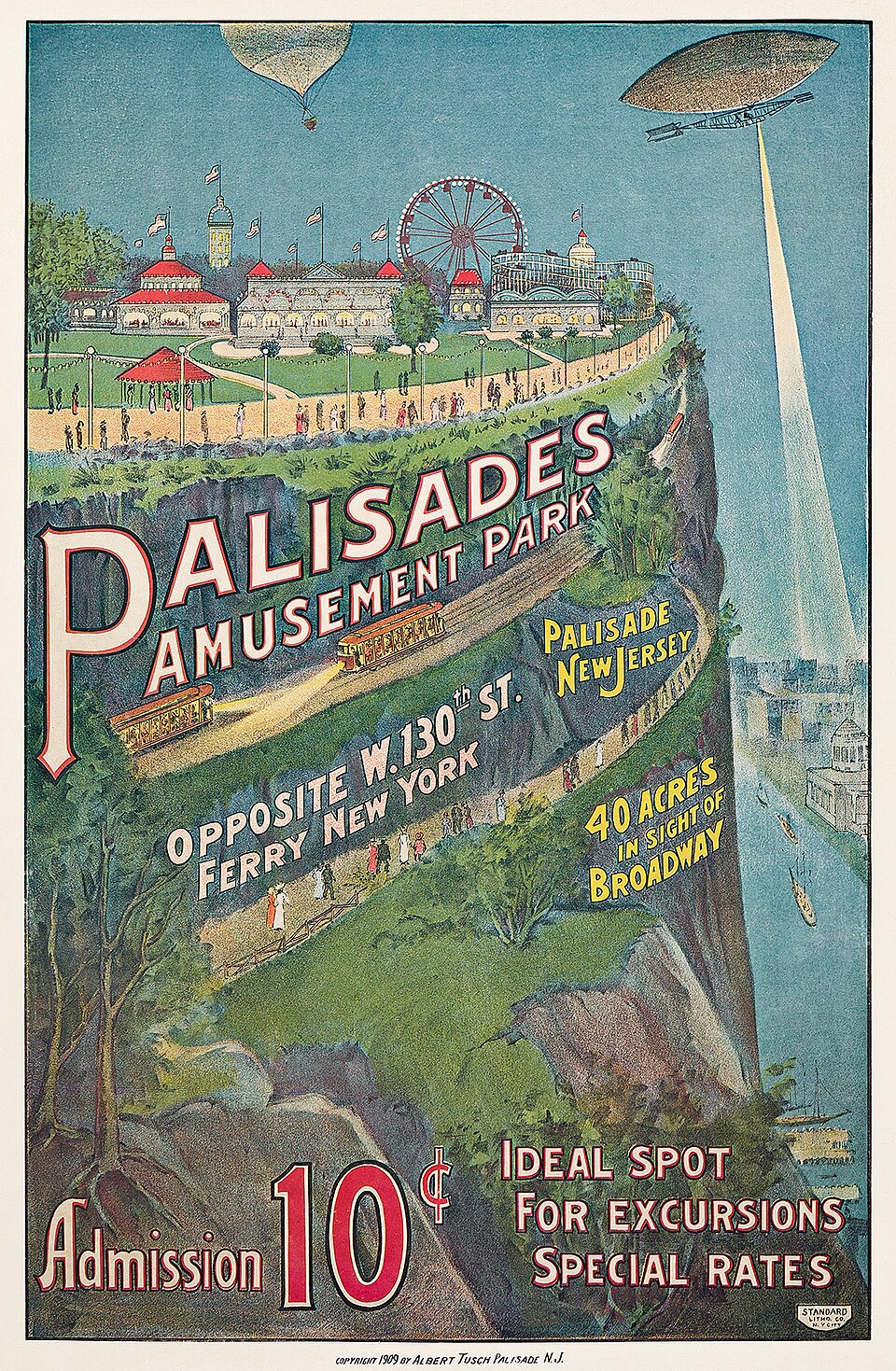
Although still far from feeling like they were out of the woods, for young people in America, life went on and they continued to do the only things they knew to pass the time and prepare themselves for their futures. “I met Nancy on the route,” recalled Benvenuti with a gleam in his eye. “I was 16. You see in New Jersey, the towns are so close together and in them days we went to the Italian churches, where Italian was spoken. There were 16 towns with 16 to 18 churches, all within 20 miles. We used to go and sing in the choir, and they had bands, with instruments. So, we were friendly with all the girls and guys in the choirs of the other churches we would visit. The first time I ever met her was in her church, in Carlstadt which was about 10 miles from Little Falls where we grew up. We were there this particular time to see the Baptism; we liked to go to the church that was having a baptism. There was a stairway coming down from the church to the cellar where they had the baptism bay, like a pool. I was standing at the bottom doorway, and she was coming down the steps. I looked at her and she looked at me, and I could just feel that that was it, and she was really pretty! We had a lot of fun together. I remember she had a lot of boys that wanted her, and we used to go to a park right across from New York City on the edge of New Jersey where they had the loop de loop, what do you call it—the rollercoaster.”
Palisades Park, originally known as “The Park on the Palisades,” was not very far from Carlstadt where Nancy lived, and it would eventually grow to rival Coney Island for its amusements and rides. First opened in 1898 overlooking the Hudson River on the border of what is now Cliffside Park and Fort Lee across from upper Manhattan, the park was first built by the Bergen County Traction Company as a trolley park to attract evening and weekend riders. Soon after its opening, it was sold to private investors who expanded it by installing a variety of attractions. In 1908, its owners rebranded it the Palisades Amusement Park, and until it closed in 1971 it was one of the nation’s best-known parks. At its peak it featured roller coasters, a Ferris wheel, and one of the world’s largest collections of rides and games.[iii]
“A lot of guys wanted to take her on it and she would never ever go, and she wouldn’t go with me either,” recalled Benvenuti. “So we went there one day after Sunday School and I says to her ‘you want to take a ride on the rollercoaster with me?’ I’d like to’ I says to her. She said ‘I don’t like to but I’ll go with you’ (heh heh), so she went on it with me and she squeezed me to death. She was so scared, she broke her glasses. But we had a lot of picnics, you know, and we would always go out with the Sunday School class.” It was during his courtship of Nancy that Benvenuti’s business model began to evolve, sparing households an impromptu midnight sermon. Like the churches, Italian stores were abundant. “Well, then I was in the grocery business, goin house to house, see, and then I was buyin direct, sellin bigger amounts,” he explained. “I would buy maybe a half a case or a case of tomatoes, whole pieces of cheese, you know, whole balls of provolone, and you know I was doing a pretty good business. Then, along with that, I started selling to little stores. You know, just like they had little Italian churches they had little Italian stores on every block, and I could sell to them because I was buying direct and I could compete with all the wholesalers. I was gettin away from the homes and more involved with the stores.” Everything was going Benvenuti’s way it seemed, when another tragedy would befall the family, testing both his faith and his mettle.
On February 24, 1937, the family lost Joe’s older brother Santo, the oldest of Angelo’s children with Bertha, to Typhoid Fever at the young age of 22. It was a devastating blow, another reminder of God’s ability to take each and every one of his children home, at any given time. Benvenuti had his faith to lean on and a rapidly growing business to tend to, while his romance with Nancy blossomed. His business of selling wholesale groceries was setting sail. Although not much of a sports enthusiast or athlete, Benvenuti did have an allegiance to the New York Yankees, who, during the same period, would win four World Series titles in a row. They would add two more in 1941 and 1943 behind legends like Joe DiMaggio and Phil Rizutto, who starred in all but the 1943 series when they served in World War II.
These years marked a period of much happiness and hope for the future for the two, culminating in their wedding vows to one another on February 1, 1942. But the gusts of wind from the war that had been howling for several years on the continent of his forefathers were about to blow Benvenuti off course, shaking the building blocks of the fortress shielding him from the factory work and odd jobs he had left in his dust. The Axis powers, led by the genocidal maniac Adolph Hitler, were preparing for what no one born in 1920 could ever have fathomed would be aggression so fierce and destructive that it threatened not just America but the very future of the planet.[iv] The course of history for the world and for Benvenuti was about to change dramatically.
[i] https://www.goodreads.com/work/quotes/7113455-clara-s-kitchen-wisdom-memories-and-recipes-from-the-great-depression
[ii]Excerpted from Looking Back at the Original Drive-In Movie Theater, by Kristin Butler July 2, 2021 https://www.pbs.org/wgbh/americanexperience/features/looking-back-original-drive-in-movie-theater/
[iii] Amusement Parks – Origins & History https://www.newjerseyalmanac.com/amusement-parks.html
[iv] Excerpt(s) from THE GREATEST GENERATION by Tom Brokaw, copyright © 1998, 2004 byTom Brokaw. Used by permission of Random House, an imprint and division of Penguin Random House LLC. All rights reserved.